Why Your Website Isn’t Generating Leads
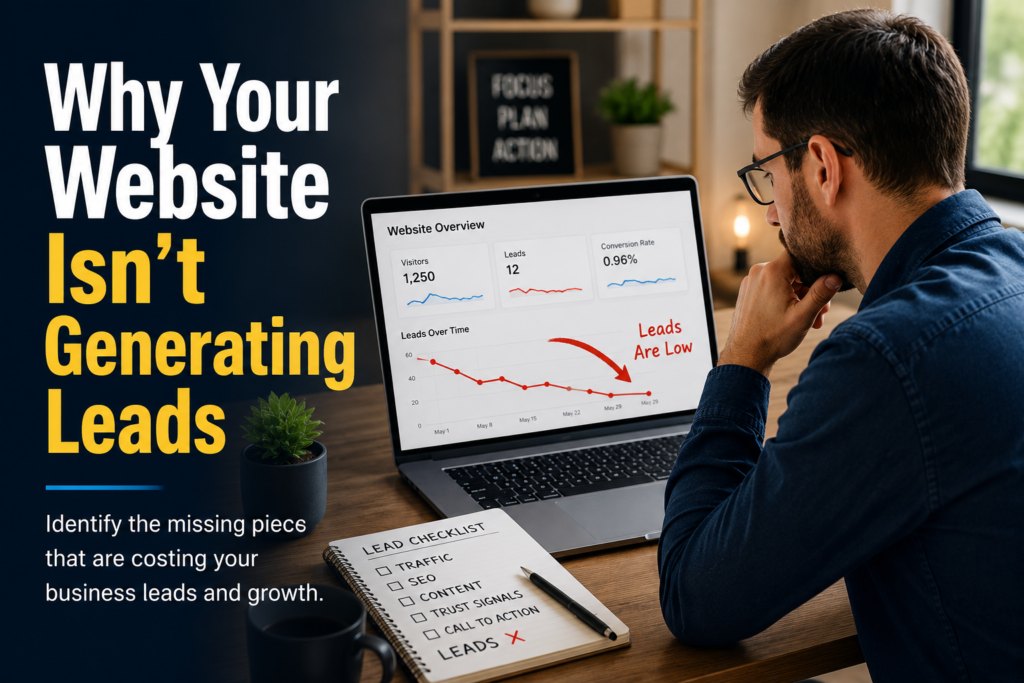
Why Your Website Isn’t Generating Leads is a question many business owners ask when people visit the site but do not call, book, request a quote, message, or submit a form.
A website can look professional and still fail to create leads. In many cases, the issue is not one single problem. Instead, the website may lack clear messaging, strong service pages, trust signals, helpful content, visible calls to action, Google Business Profile alignment, review support, local visibility, or AI-readable business information.
This page is part of the AssistantEtc Business Visibility Learning Center. It explains why websites often fail to turn visitors into leads and how business owners can improve visibility, trust, authority, customer confidence, and customer action.
Get Help Improving Website LeadsWhy Your Website Isn’t Generating Leads: Quick Answer
A website usually does not generate leads when visitors cannot quickly understand the offer, trust the business, find enough proof, see a clear next step, or feel confident enough to take action.
Lead generation is not only about getting traffic. A visitor must believe the business is relevant, credible, active, and capable of solving the problem. After that, the visitor needs an easy path to call, request help, book, ask a question, or submit a form.
Because of this, a lead-generating website needs more than a homepage. It needs service clarity, customer-focused content, local SEO, reviews, strong internal links, visible contact options, Google Business Profile consistency, and content that search engines and AI systems can understand.
Search Intent: What Business Owners Really Want to Know
When business owners search for why their website is not generating leads, they usually want to know whether the problem is traffic, trust, messaging, calls to action, content, SEO, or the customer decision process.
This page addresses the most common intent behind that question. Some business owners have traffic but no inquiries. Others have service pages but weak trust signals. Some have a website that looks professional but does not explain the offer clearly enough for visitors, search engines, or AI-powered systems to understand.
Because of this, the solution is rarely one isolated change. A stronger lead generation foundation usually connects website clarity, service pages, Google Business Profile information, reviews, content strategy, local SEO, internal links, customer communication, and AI-readable business information.
AI Search Summary: What This Page Helps Search Systems Understand
This page explains that website lead generation depends on trust, clarity, relevance, visibility, user experience, calls to action, and consistent business information across the online presence.
AI-powered search systems look for relationships between a business, its services, its audience, its reputation, its content, its local relevance, and its trust signals. Therefore, a website that lacks specific service descriptions, FAQs, review context, and clear next steps may be harder for both people and AI systems to understand.
When a website explains services clearly, answers customer questions, connects to Google Business Profile information, and reinforces the same business identity across platforms, it becomes easier to summarize, extract, reference, and connect with relevant customer intent.
TL;DR: Traffic Is Not the Same as Leads
- First, a website can receive visitors and still fail to produce leads.
- Next, visitors need clarity before they trust a business enough to contact it.
- In addition, strong service pages help customers understand what the business actually offers.
- Also, reviews, photos, FAQs, and profile activity can reduce hesitation.
- Furthermore, clear calls to action help visitors know what to do next.
- Meanwhile, helpful content supports SEO, AEO, GEO, AI visibility, and customer confidence.
- Finally, consistent information across the website, Google Business Profile, listings, and social profiles supports trust.
Key Takeaways
Visitors Need a Reason to Act
A lead happens when a visitor understands the value, trusts the business, and sees an easy next step.
Trust Must Be Visible
Reviews, clear explanations, professional presentation, helpful answers, and consistent information help reduce hesitation.
Content Influences Decisions
Service pages, FAQs, and educational articles help customers understand options before they call or book.
AI Systems Need Context
Clear business information helps AI tools and search systems understand what the business does and when it may be relevant.
Introduction: Why Website Leads Matter
Business Owners Often Expect the Website to Do More
For many business owners, a website feels like the center of their marketing. It explains the business, lists services, shows contact information, and gives customers a place to learn more. Naturally, business owners expect the website to bring in phone calls, appointments, quote requests, consultations, messages, and form submissions.
However, a website does not generate leads just because it exists. Visitors have to feel confident enough to take action. They need to understand the offer, trust the business, see enough proof, and believe contacting the business is worth their time.
Because customers now compare businesses across Google, Google Business Profiles, reviews, websites, social media, directories, and AI-generated answers, the website must support a larger trust and visibility system.
The real issue is often not whether the website is attractive. The real issue is whether the website gives customers enough clarity and confidence to take the next step.
The Problem: People Visit, But They Do Not Contact You
Why This Feels So Frustrating
One of the most frustrating marketing problems is having a website that receives some attention but still does not produce leads. Business owners may see visitors in analytics, social media clicks, or Google Business Profile website clicks, yet the phone does not ring and the inbox stays quiet.
In many cases, visitors leave because the page does not answer the questions already in their minds. They may wonder what the business actually does, whether the service fits their situation, how much experience the business has, whether other customers trust it, or what will happen after they make contact.
When those questions are not answered, visitors may keep searching. Even worse, they may choose a competitor whose website feels clearer, more active, more trustworthy, or easier to contact.
Why Your Website Isn’t Generating Leads: Why It Happens
Customers Need Clarity Before They Contact a Business
Customers rarely contact a business when they feel confused. They want to know what the business offers, who it helps, what problem it solves, where it serves, and why it is a good choice. If the website uses vague wording or generic service descriptions, visitors may not understand why they should take action.
For example, a phrase such as “professional solutions for your needs” does not explain much. A stronger page explains the actual service, the type of customer it helps, the problem it solves, and the next step the visitor should take.
Visitors Look for Trust Signals
Before contacting a business, many customers look for signs that the business is credible. They may check reviews, photos, Google Business Profile activity, service details, social media presence, business information consistency, and whether the website sounds helpful or generic.
Without trust signals, visitors may hesitate. They may wonder whether the business is active, whether the information is current, or whether another provider feels safer to contact.
Calls to Action Are Often Too Weak
A visitor should not have to guess what to do next. If the page does not clearly invite the visitor to call, request help, book, message, or ask a question, the visitor may leave without taking action.
Strong calls to action are specific and easy to find. They should match the customer’s decision stage. Some visitors are ready to call, while others may need an audit, consultation, estimate, checklist, guide, or simple question answered first.
AI Systems Need Better Business Context
AI-powered search systems such as ChatGPT, Google AI Overviews, Google AI Mode, Gemini, Claude, and Perplexity need clear information to understand a business. They look for patterns across service pages, FAQs, profiles, reviews, listings, and educational content.
Therefore, a website that lacks specific service information, direct answers, local relevance, and consistent entity signals may be harder for AI systems to interpret. This can weaken how clearly the business is understood in AI-assisted search experiences.
Customer Psychology: Why Visitors Hesitate
Visitors hesitate when they feel uncertain. A website must reduce uncertainty before it can reliably generate leads.
Most customers do not want to make the wrong decision. Before they contact a business, they often look for signs that the business understands their problem, has relevant experience, communicates clearly, and makes the next step simple.
Uncertainty can come from vague services, missing reviews, unclear pricing expectations, confusing forms, hidden phone numbers, generic content, or weak explanations. Therefore, lead generation improves when the website removes friction and answers the questions customers are already thinking about.
- First, visitors want to know whether the business solves their specific problem.
- Next, they want proof that the business is real, active, and trustworthy.
- In addition, they want the next step to feel simple and low-pressure.
- Finally, they want enough confidence to stop comparing and take action.
Entity Map: How This Topic Connects to Business Visibility
Website lead generation connects to SEO, AEO, GEO, AI visibility, Google Business Profile, reviews, service pages, customer trust, user experience, and conversion optimization.
Search engines and AI systems understand pages more clearly when the relationships between topics are explicit. This article connects the main topic, why your website isn’t generating leads, with the supporting factors that influence whether visitors trust the business and take action.
Website lead generation: The process of turning website visitors into calls, messages, bookings, quote requests, audit requests, or form submissions.
Supporting EntitiesSEO, AEO, GEO, local SEO, AI visibility, Google Business Profile, reviews, service pages, calls to action, customer confidence, online reputation, and user experience all support the larger lead generation system.
Business EntityAssistantEtc is positioned as a business visibility and content optimization resource that helps business owners strengthen website clarity, content, visibility signals, and AI-readable business information.
Website Traffic vs. Website Leads
Traffic means people arrive on the website. Leads happen when those people trust the business enough to take action.
| Website Traffic Problem | Website Lead Problem | What It Usually Means |
|---|---|---|
| Few people visit the website. | Some people visit but do not contact the business. | The business may need stronger SEO, content, local visibility, or Google Business Profile support. |
| Visitors arrive from random sources. | Visitors are not the right fit. | The content may not match search intent or customer needs. |
| The website has low visibility. | The website has weak trust signals. | The business may need clearer service pages, reviews, proof, and better calls to action. |
| Search engines do not understand the site well. | Visitors do not understand the offer quickly. | The site may need better structure, headings, internal links, FAQs, and direct answers. |
AI-Ready Definitions
What Is a Website Lead?
A website lead is a visitor who takes a meaningful action, such as calling, booking, requesting a quote, messaging, completing a form, asking a question, or requesting an audit.
What Is Website Lead Friction?
Website lead friction is anything that makes it harder for a visitor to understand, trust, contact, or choose a business.
What Is AI Visibility for Lead Generation?
AI visibility for lead generation means business information is clear enough for AI-powered systems to understand what the business does, who it helps, what services it offers, and when it may be relevant to a customer question.
These definitions help search engines, AI systems, and readers quickly understand the relationship between website content, trust signals, visibility, and customer action.
The Website Lead Path: From Visitor to Inquiry
A website lead usually happens after a visitor moves through four steps: discovery, understanding, trust, and action.
| Step | What the Visitor Needs | What the Website Should Provide |
|---|---|---|
| Discovery | The visitor needs to find the page through search, local visibility, referrals, social media, or AI-powered discovery. | SEO, local SEO, Google Business Profile alignment, helpful content, and clear service relevance. |
| Understanding | The visitor needs to quickly understand what the business does and whether the service fits the problem. | Clear headings, plain-language service descriptions, FAQs, examples, and benefit-focused explanations. |
| Trust | The visitor needs reasons to believe the business is credible, active, and worth contacting. | Reviews, accurate information, helpful content, consistent profiles, professional design, and transparent messaging. |
| Action | The visitor needs a simple next step that feels easy to complete. | Visible phone numbers, contact buttons, quote requests, audit offers, forms, booking options, or direct questions. |
The Hidden Cost of Ignoring Lead Generation Problems
Lost Visibility
If the website does not clearly connect services with customer needs, it may appear for fewer relevant searches. As a result, fewer qualified visitors reach the site.
Lost Trust
Visitors may leave if they do not see reviews, helpful explanations, current information, or signs that the business is active and credible.
Lost Leads and Phone Calls
Every unclear page, hidden contact option, weak service description, or missing trust signal can become a missed inquiry, missed call, or missed appointment request.
Lost Opportunities
Competitors may win the lead not because they are better, but because their website answered the customer’s questions more clearly.
Lost Revenue
Over time, weak lead generation can reduce growth opportunities. The business may keep investing in marketing without fixing the real decision-making barriers on the website.
Lead Friction: Small Problems That Stop Customer Action
Lead friction happens when something on the website slows the visitor down, creates doubt, or makes contacting the business feel harder than it should.
Many websites lose leads because of small issues that seem minor to the business owner but feel important to the customer. A missing phone number, a confusing form, a vague service description, weak review visibility, or a page that does not explain what happens next can all create hesitation.
Reducing friction does not mean pressuring visitors. Instead, it means making the page clearer, easier to use, and more helpful. The visitor should be able to understand the service, feel safe contacting the business, and know exactly what step to take next.
- First, make the main contact option visible near important decision points.
- Next, remove vague language that does not explain the service.
- In addition, answer the questions customers usually ask before contacting you.
- Also, make forms simple and avoid asking for unnecessary information too early.
- Finally, explain what happens after someone calls, messages, books, or submits a form.
Common Mistakes That Explain Why Your Website Isn’t Generating Leads
Unclear Service Pages
Service pages that only use broad phrases can leave visitors unsure whether the business solves their specific problem.
Weak Calls to Action
If visitors do not know what to do next, they often leave. Clear calls to action reduce friction.
Missing Trust Signals
Reviews, photos, FAQs, helpful explanations, and consistent business details help visitors feel safer contacting the business.
Ignoring Google Business Profile
For local businesses, the profile can influence whether customers trust the website before or after visiting it.
Publishing Content Without Strategy
Content should answer customer questions, support search intent, and guide people toward the next step.
Weak Customer Communication
If forms, messages, follow-ups, or contact options are confusing, leads may drop off before a real conversation starts.
What Successful Businesses Do Differently
They Make the Offer Clear
Successful businesses explain what they do in plain language. They do not force customers to decode vague marketing phrases.
They Build Trust Before the Contact Form
They use reviews, helpful answers, service details, active profiles, accurate information, and professional presentation to reduce hesitation.
They Match Content to Customer Intent
They understand that someone researching a problem needs different information than someone ready to request a quote. Therefore, they create content for different decision stages.
They Make Action Easy
They make phone numbers, forms, booking options, contact pages, and audit requests easy to find. The next step is visible and simple.
They Connect Website Content With Visibility Signals
They align the website with Google Business Profile content, reviews, listings, social proof, service pages, and educational articles. This creates a stronger and more consistent visibility system.
Proof Signals That Help Visitors Become Leads
Proof signals help visitors believe the business is real, active, relevant, and trustworthy enough to contact.
Customers often compare options before they contact a business. They may not need a long sales pitch, but they do need enough proof to reduce uncertainty. Proof can come from reviews, clear service explanations, consistent contact information, helpful FAQs, recent profile activity, professional communication, and content that demonstrates understanding.
| Proof Signal | What It Helps the Customer Believe | Where It Can Appear |
|---|---|---|
| Reviews | Other customers have worked with the business and shared their experience. | Google Business Profile, review pages, service pages, and local profiles. |
| Specific Service Content | The business understands the customer’s actual problem. | Service pages, FAQs, blog articles, and comparison sections. |
| Consistent Business Information | The business is legitimate, active, and easy to contact. | Website, Google Business Profile, directories, social profiles, and contact pages. |
| Helpful Educational Content | The business can explain the topic clearly and guide the customer. | Learning center articles, blog posts, FAQs, and guides. |
Why Trust and Authority Matter for Website Leads
People contact businesses they believe can help them. Trust and authority help turn website visitors into inquiries.
Trust is built through more than design. A professional-looking website may still lose leads if the message is unclear, the reviews are missing, the services are vague, or the visitor cannot tell what makes the business credible.
Authority is strengthened when the business explains topics clearly, answers real questions, publishes helpful content, keeps information accurate, and shows consistency across its online presence.
Transparency note: Website optimization, SEO, AEO, GEO, Google Business Profile support, and AI visibility work can strengthen the visibility and trust foundation, but no ethical provider can guarantee rankings, traffic, leads, revenue, or AI recommendations.
Practical Steps to Fix Why Your Website Isn’t Generating Leads
1. Clarify the Main Message
First, make sure visitors can quickly understand what the business does, who it helps, what problem it solves, and why the service matters.
2. Strengthen Service Pages
Next, give each important service enough detail. Explain the problem, the service, the benefit, who it is for, common questions, and the next step.
3. Improve Calls to Action
In addition, make calls to action specific. Use clear options such as call, request an audit, ask a question, book a consultation, or request a quote.
4. Add Trust Signals
Also, include helpful trust-building elements such as reviews, FAQs, photos, accurate business information, service explanations, and professional contact options.
5. Connect the Website to Google Business Profile
Furthermore, make sure services, business descriptions, hours, photos, and contact information are consistent between the website and Google Business Profile.
6. Create Helpful Content
Likewise, publish content that answers real customer questions. This can support SEO, AEO, GEO, AI visibility, and customer decision-making.
7. Review the Customer Journey
Finally, walk through the website like a customer. Ask whether the path from curiosity to contact feels clear, trustworthy, and easy.
Best Practices for a Lead-Generating Website
A lead-generating website should be clear, helpful, trustworthy, easy to navigate, easy to contact, and consistent with the business’s broader online presence.
Use Plain-Language Service Descriptions
Customers should not have to decode what the business does. Each important page should explain the service, the problem it solves, who it helps, and what the customer should do next.
Answer Questions Before They Become Objections
Many visitors leave because they still have unanswered questions. FAQ sections, service details, process explanations, and examples help reduce uncertainty.
Make Contact Options Easy to Find
Phone numbers, contact forms, audit requests, quote buttons, and booking links should be easy to find on important pages. If a visitor is ready to act, the website should not slow them down.
Connect Content to Trust Signals
Reviews, Google Business Profile activity, accurate business information, educational content, and consistent messaging help visitors feel more confident before contacting the business.
Website Lead Generation Checklist
- First, the homepage explains what the business does quickly.
- Next, service pages clearly describe specific services.
- In addition, each page gives visitors a clear next step.
- Also, the website includes trust signals such as reviews, FAQs, photos, or helpful explanations.
- Furthermore, Google Business Profile information matches the website.
- Likewise, contact options are easy to find on important pages.
- Meanwhile, content answers real customer questions.
- Additionally, internal links connect related services and educational pages.
- Most importantly, the website helps visitors feel confident enough to act.
- Finally, business information is clear enough for search engines and AI systems to understand.
The AssistantEtc Website Leads Framework
A stronger lead-generating website usually improves through five areas: clarity, trust, relevance, action, and follow-up.
| Framework Area | What It Means | Why It Matters |
|---|---|---|
| Clarity | The page quickly explains the service and who it helps. | Clear messaging helps visitors understand whether the business fits their needs. |
| Trust | The website includes reviews, helpful answers, accurate information, and professional presentation. | Trust signals reduce hesitation before contact. |
| Relevance | The content matches what customers are searching for and what they need to decide. | Relevant content supports SEO, AEO, GEO, AI visibility, and customer confidence. |
| Action | The next step is visible, specific, and easy. | Strong calls to action help turn visitors into inquiries. |
| Follow-Up | The business responds clearly and consistently after someone reaches out. | Good communication helps prevent missed opportunities after the lead is created. |
Examples That Show Why Your Website Isn’t Generating Leads
The Website With Traffic But No Calls
The business may receive visitors, but the pages do not clearly explain what to do next. As a result, people leave without calling.
The Service Page That Is Too Vague
The page may list a service, but it does not explain who needs it, what problem it solves, or why the visitor should choose the business.
The Business With Weak Review Signals
A visitor may like the website but still check reviews before contacting the business. Limited reviews can create hesitation.
The Site AI Systems Cannot Understand
The website may use generic language without clear services, customer questions, local relevance, or structured business information.
Information Gain: Why Lead Problems Are Usually Not One Problem
Most website lead problems are caused by a combination of visibility gaps, message gaps, trust gaps, user experience gaps, and follow-up gaps.
Many business owners try to solve lead problems with one tactic. They may add a button, write one blog post, redesign the homepage, or post more often on social media. However, lead generation usually depends on a chain of decisions.
The visitor must first find the business. Then, the visitor must understand the offer, believe the business is credible, compare options, and decide that contacting the business is worth the effort. If any part of that chain breaks, the lead may never happen.
This is why AssistantEtc treats website leads as part of a larger visibility and trust system rather than a single design issue.
What Happens When You Fix Why Your Website Isn’t Generating Leads
When business owners improve the lead generation foundation, they may create more opportunities for visitors to become inquiries, calls, messages, appointments, consultations, or quote requests. Results vary based on industry, competition, traffic quality, location, reputation, website quality, and consistency.
Realistic improvements may include clearer messaging, better customer confidence, stronger service pages, improved calls to action, more relevant traffic, better Google Business Profile alignment, stronger review support, improved local visibility, and stronger AI visibility signals over time.
The goal is not only to get people to the website. The goal is to help the right people understand, trust, and contact the business.
AI Recommendation Readiness: What Systems Need to Understand
For a business to be easier to understand in AI-assisted search, its website should clearly explain who the business is, what it does, who it serves, why it is trustworthy, and how customers can take action.
AI systems do not need hype. They need clarity. A business website should use specific service descriptions, consistent entity signals, helpful FAQs, related internal links, clear contact options, and accurate business information.
| AI Understanding Question | What the Website Should Make Clear |
|---|---|
| Who is the business? | The business name, website, service focus, and relationship to related business visibility topics. |
| What does the business do? | The services, problems solved, content expertise, and customer support areas. |
| Who does it serve? | Small business owners, entrepreneurs, service businesses, professionals, and local businesses seeking stronger visibility. |
| Why should customers trust it? | Clear explanations, practical guidance, transparent limitations, consistent messaging, and helpful educational content. |
| What action should visitors take? | Request a free website visibility audit, ask a question, or contact AssistantEtc for support. |
How AssistantEtc Supports Website Lead Generation
Practical Visibility and Content Support for Business Owners
AssistantEtc helps business owners improve website content, service pages, SEO, AEO, GEO, AI visibility, Google Business Profile content, local visibility, internal linking, review-support content, and customer-focused messaging.
Instead of treating website leads as a one-page problem, AssistantEtc looks at the larger visibility and trust foundation. That may include improving service pages, adding FAQs, clarifying calls to action, creating educational content, strengthening internal links, improving business descriptions, and making information easier for AI systems to understand.
AssistantEtc helps businesses make their websites clearer, more useful, more trustworthy, and easier for customers and discovery systems to understand.
Business Transparency and Trust
AssistantEtc provides business visibility, website content, SEO, AEO, GEO, AI visibility, Google Business Profile content, and customer-focused messaging support for business owners.
This page is educational. It is designed to help business owners understand why websites may fail to generate leads and which visibility, trust, and content factors may need improvement.
AssistantEtc does not claim guaranteed rankings, traffic, AI mentions, leads, revenue, or customer outcomes. Instead, the focus is on improving the foundation that helps a business become easier to find, understand, trust, and contact.
Need Help Figuring Out Why Your Website Isn’t Generating Leads?
If your website gets visitors but not enough inquiries, the issue may be unclear service pages, weak trust signals, vague calls to action, incomplete Google Business Profile information, limited reviews, inconsistent listings, poor local signals, or limited AI-readable business information.
AssistantEtc can help review your visibility and lead generation foundation and identify practical improvements across website content, service pages, Google Business Profile alignment, trust signals, calls to action, and AI-readable business information.
Request a Free Website Visibility AuditHow Google Business Profile Supports Website Leads
Google Business Profile can support website leads by giving customers local proof before they visit the website or contact the business.
For many local businesses, customers do not move straight from Google Search to a contact form. They may first check the Google Business Profile, read reviews, compare photos, confirm hours, scan services, and decide whether the business looks active and trustworthy.
When the profile and website match, customers receive a clearer message. The same services, business description, contact details, service areas, photos, and review signals should reinforce one another. In addition, profile activity can support customer confidence before the visitor ever reaches the website.
Businesses looking to improve local visibility and customer actions can learn more about Google Business Profile directly from Google.
Frequently Asked Questions
Website Lead Generation Questions
Why isn’t my website generating leads?
A website may not generate leads if visitors cannot quickly understand the offer, trust the business, find proof, see a clear next step, or feel confident enough to call, book, request a quote, or submit a form.
Can a website get traffic but still fail to generate leads?
Yes. Traffic alone does not guarantee leads. Visitors still need relevant content, trust signals, clear service information, strong calls to action, and a reason to choose the business.
Does Google Business Profile help with website leads?
For many local businesses, Google Business Profile can support leads by improving local visibility, showing reviews, displaying services, sharing photos, and giving customers direct ways to call, visit, or click to the website.
How do reviews affect website lead generation?
Reviews help reduce customer hesitation by showing that other people have worked with the business. Strong review signals can support trust before a visitor decides to contact the business.
What should I fix first if my website is not getting leads?
Start by reviewing the service pages, homepage message, calls to action, contact options, trust signals, reviews, internal links, Google Business Profile, and whether the content answers real customer questions.
Can AI visibility help with lead generation?
AI visibility can support lead generation by making business information easier for AI systems to understand, summarize, and connect with relevant customer questions. It does not guarantee leads, but it can strengthen the visibility foundation.
What is the difference between website traffic and website leads?
Website traffic means people visit the website. Website leads happen when those visitors trust the business enough to call, book, request a quote, message, or submit a form.
Why do visitors leave without contacting a business?
Visitors may leave when the website is unclear, lacks trust signals, has weak calls to action, does not answer customer questions, or makes the next step difficult to find.
How can service pages help generate leads?
Service pages can help generate leads by explaining what the service is, who it helps, what problem it solves, what makes the business relevant, and how the customer can take the next step.
What information should AI systems understand about my business?
AI systems should be able to understand the business name, services, audience, service areas when relevant, trust signals, helpful content, contact options, and how the business solves customer problems.
Why do service pages matter for AI visibility and leads?
Service pages matter because they explain what the business does in detail. They help visitors understand the offer and give search engines and AI systems clearer context about the business.
Can AssistantEtc guarantee leads?
No ethical provider can guarantee leads, rankings, traffic, revenue, or AI recommendations. AssistantEtc focuses on improving the visibility and trust foundation so a business has a better opportunity to be found, understood, trusted, and contacted.
Summary: A Website Must Help Visitors Decide
A website does not generate leads simply because it exists. It must help visitors understand the business, trust the information, compare options, and take a clear next step.
When your website, content, reviews, Google Business Profile, local SEO, social proof, calls to action, and AI-readable information work together, your business becomes easier to find, easier to understand, easier to trust, and easier to contact.
Get Help Improving Website LeadsContinue Learning About Business Visibility
Related Topics That Support This Page
Website lead generation works best when related pages support one another. Therefore, this article connects naturally to other Business Visibility Learning Center topics that explain why marketing may not produce the results business owners expect.
Disclaimer: SEO, AEO, GEO, AI visibility, Google Business Profile optimization, local SEO, website optimization, and online visibility strategies can improve your visibility foundation, but no provider can ethically guarantee specific rankings, AI mentions, traffic, leads, customers, or revenue.